
 Introduction
Catering events demand precision, timing, and flawless presentation. From corporate luncheons to wedding buffets, every detail shapes the guest experience. One often overlooked detail is ice.
Ice Cubes for Catering do more than chill drinks. They help preserve food safety, maintain beverage quality, and support professional presentation. Choosing the wrong type of ice can lead to rapid melting, watery displays, and service delays.
Selecting the right ice cubes ensures smooth operations and satisfied guests. In this guide, we explore how to make the best choice for catering events and buffets.
Understanding the Role of Ice Cubes for Catering
Ice plays a functional and visual role in catering. Its primary job is temperature control. Cold foods must remain below safe temperature limits to prevent bacterial growth. Ice supports this requirement during transport and service.
Ice Cubes for Catering help maintain safe holding temperatures for salads, seafood, dairy items, desserts, and beverages. When placed correctly, ice absorbs heat from surrounding items and slows temperature rise. This process, called heat transfer, keeps food within safe ranges.
Beyond safety, ice affects service flow. Beverage stations rely on steady cooling to keep drinks refreshing throughout the event. Rapid melting forces staff to replace ice frequently, which interrupts service and increases workload.
Presentation also matters. Guests expect buffets to look clean and organized. Excess water from melting ice can create messy displays and weaken food containers. Choosing ice that melts at a controlled rate improves both hygiene and appearance.
Ice also impacts guest comfort. Warm drinks or partially chilled desserts reduce satisfaction. Consistent cooling maintains product quality from start to finish.
For catering professionals, ice is not an afterthought. It functions as a key operational tool that supports safety, efficiency, and visual standards. Understanding this role helps teams choose the right type for each event.
Different Types of Ice Cubes and Their Uses
Not all ice cubes perform the same way. Ice Cubes for Catering come in several forms, and each serves a specific purpose. Selecting the right type depends on event duration, menu style, and display setup.
Standard cube ice is the most common option. These medium-sized cubes work well for beverage service. They cool drinks efficiently and are easy to handle. However, they may melt faster in outdoor or high-temperature environments.
Large cube ice melts more slowly because it has less exposed surface area. Surface area refers to the outer portion of ice that touches warm air. Less exposure slows melting. Large cubes work well in premium beverage stations or events that last several hours.
Half cubes are smaller and fit tightly around bottles and containers. They provide faster cooling but melt more quickly. Caterers often use them in transport coolers where quick chilling is necessary.
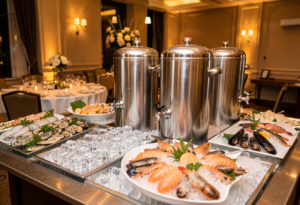
Crushed ice serves decorative and rapid-cooling purposes. It works well for seafood displays or salad bars where direct contact cooling is required. However, crushed ice melts rapidly and needs frequent replacement.
Clear ice cubes offer visual appeal. They appear transparent and refined, which enhances drink presentation. These cubes are denser and melt slower than cloudy ice. For upscale events, clear ice adds a premium touch.
Understanding these options allows catering teams to match ice type with event needs. The right selection balances cooling performance, presentation, and operational efficiency.
How Ice Size and Shape Affect Food & Beverage Service
Ice size and shape directly influence how well it performs during an event. Ice Cubes for Catering must match the type of service provided. The wrong size can lead to rapid melting or inefficient cooling.
Larger cubes melt more slowly because they have less surface area compared to their volume. Less surface area means less contact with warm air and liquids. This makes large cubes ideal for beverage stations that operate for several hours. Guests can enjoy cold drinks without excessive dilution.
Smaller cubes cool items quickly because they surround bottles and containers more closely. Their increased surface contact speeds up heat transfer. However, they melt faster and may require frequent replacement during long events. Caterers often use smaller cubes for short-term chilling or transport.
Shape also affects performance. Uniform square cubes stack neatly in beverage bins and maintain airflow between layers. This improves cooling efficiency and reduces uneven melting. In contrast, irregular shapes may create gaps that trap warm air.
Crushed ice works well for food displays such as seafood platters. It molds easily around trays and provides direct surface contact. However, it melts quickly and produces more water. Caterers must monitor crushed ice closely to prevent messy displays.
Clear, dense cubes maintain structure longer. Their smooth surfaces resist cracking and breaking. This durability supports premium drink presentation and reduces waste.
Choosing the correct size and shape ensures stable temperatures, efficient service, and clean presentation throughout the event.
Maintaining Food Safety at Catering Events
Food safety remains the top priority at any catering event. Ice Cubes for Catering play a critical role in keeping cold foods out of the temperature danger zone. The danger zone ranges between 5°C and 60°C, where bacteria grow rapidly.
Cold foods must stay below 5°C to remain safe. Ice supports this requirement by absorbing heat from trays and containers. Proper placement improves effectiveness. Placing ice both beneath and around food containers creates better airflow and stable cooling.
Caterers should elevate food trays slightly above melting ice. This prevents direct contact with water and reduces contamination risk. Meltwater can weaken packaging and compromise hygiene.
Regular temperature checks are essential. Use food thermometers to confirm that items remain within safe limits. Do not assume that visible ice guarantees safe internal temperatures. Monitoring ensures compliance with health regulations.
Outdoor events require extra caution. Sunlight and high ambient temperatures accelerate melting. Position buffet tables in shaded areas when possible. Rotate food in smaller batches to maintain freshness and safety.
Staff training also supports compliance. Team members must understand correct ice placement, monitoring routines, and replacement timing. Clear procedures reduce risk and improve accountability.
Maintaining food safety protects guests and safeguards the catering company’s reputation. Proper ice selection and management form a key part of this responsibility.