
Dry Ice
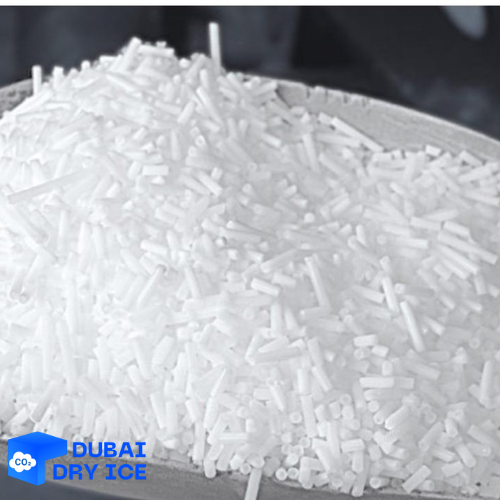
3 MM Dry Ice
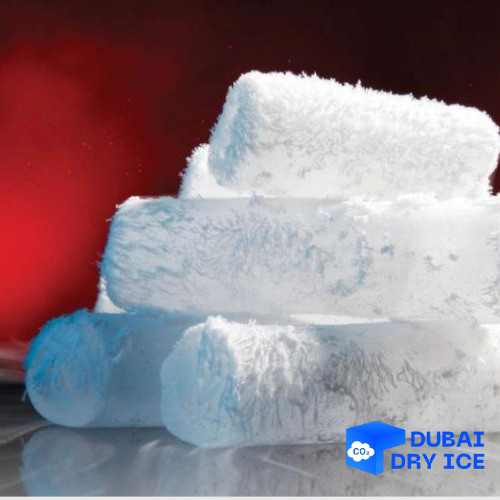
16 MM Dry Ice
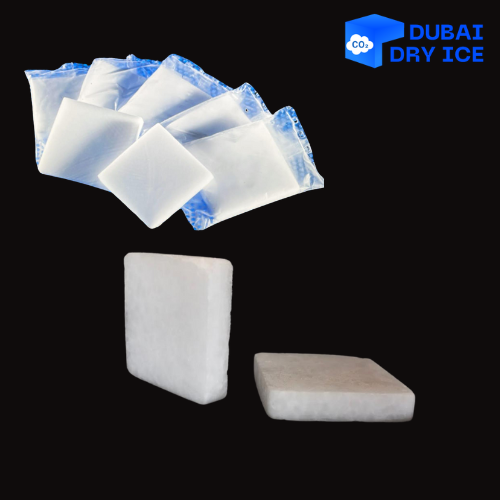
250gm/500gm/1kg Block Dry Ice
How Dry Ice Can Help You
- Temperature Control: Dry ice maintains low temperatures, making it ideal for preserving perishable items during transport or storage.
- Extended Shelf Life: Using it can extend the shelf life of food and pharmaceuticals by slowing down spoilage and maintaining freshness.
- Cost-Effective Shipping: It reduces the need for refrigeration during shipping, potentially lowering shipping costs and providing efficient temperature management.
- Versatile Applications: It is useful in various industries, including food service, healthcare, and shipping, for tasks like flash freezing and preserving the quality of sensitive products.
Cutting Edge Cold Chain Management
- Innovative cold chain management ensuring optimal product temperature and quality.
- State-of-the-art cold chain management for maintaining product integrity throughout distribution.
- Leading cold chain management solutions for superior temperature control and reliability.
- High-tech cold chain management for preserving freshness and extending shelf life.
DRY ICE PRODUCT SPECS
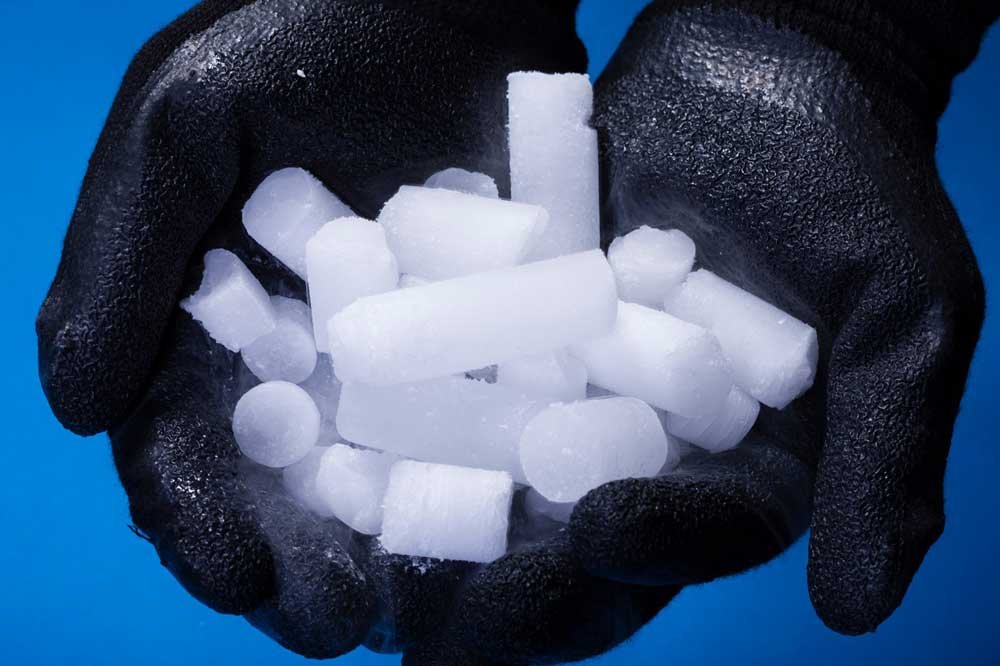
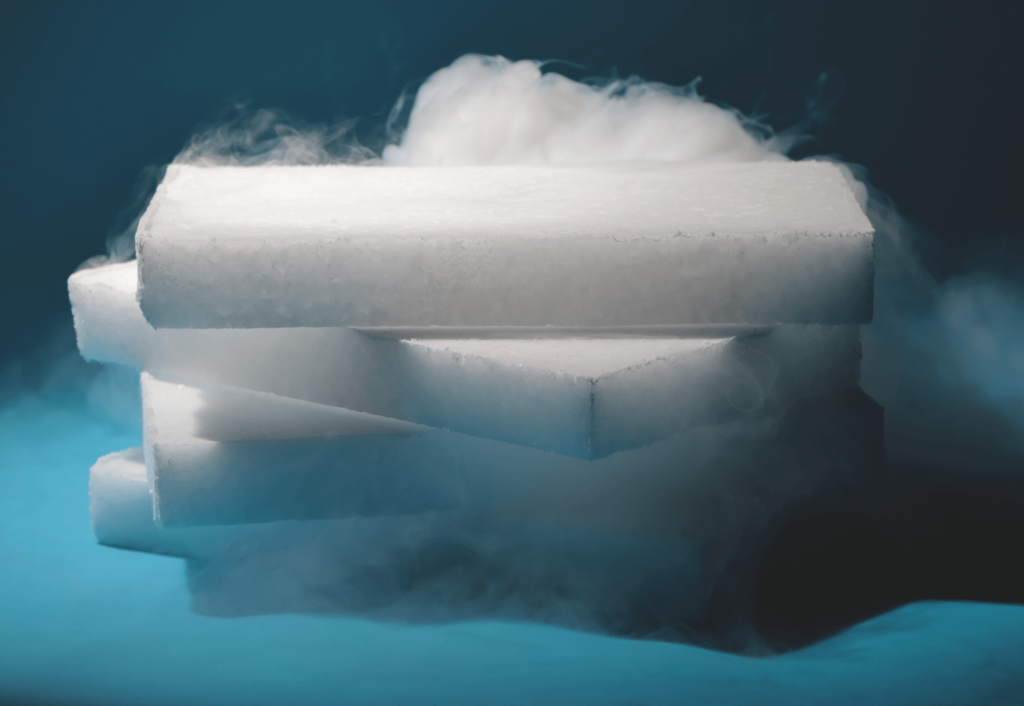

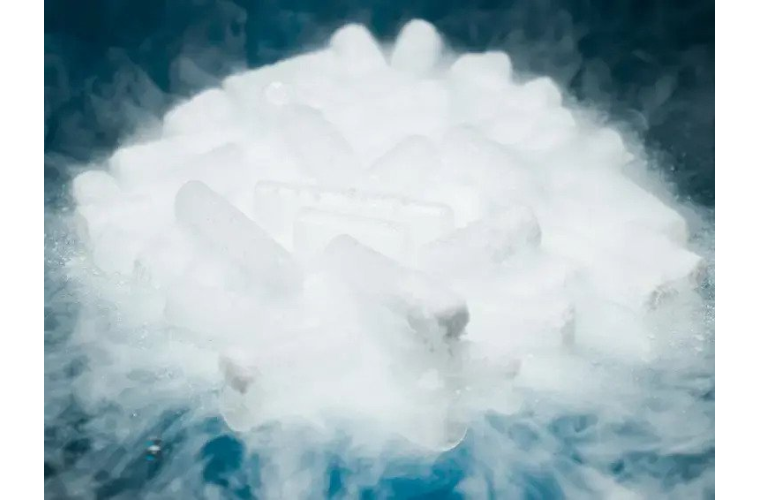
SAFETY
Due to its extremely low temperatures, proper safety measures for handling, storage, and transportation of dry ice are essential, ensuring its safe use and minimizing risks.
- Sublimation: It sublimates at -78.5°C (-109.3°F), transitioning directly from a solid to a gas without becoming liquid.
- Density: It is denser than regular ice, which makes it sink in water. It has a density of about 1.56 grams per cubic centimeter.
- Cooling Effect: It provides an effective cooling effect, making it ideal for preserving perishable goods during shipping or storage.
- Non-Toxic: It is generally safe to use for food preservation, as it does not leave any residue or contamination when it sublimates.
- Pressure Generation: When it sublimates in a sealed container, it can create pressure, so appropriate precautions must be taken to prevent explosions.
- Frostbite: Contact with dry ice can cause severe skin burns or frostbite due to its extremely low temperature. Proper protective gear, such as gloves, should be used when handling it.
- Sublimation Gas: As dry ice sublimates, it produces carbon dioxide gas. In enclosed spaces, this can lead to asphyxiation due to displacement of oxygen, making proper ventilation crucial.
- Pressure Buildup: If dry ice is sealed in a container, the sublimation gas can create high pressure, leading to the risk of explosion. Always use appropriate containers that can relieve pressure.
- Storage Risks: Improper storage of it can lead to hazards such as leaking gas or accidental exposure. It should be stored in well-ventilated areas and in appropriate containers.
- Ingestion: Consuming it can cause severe internal injuries, including frostbite to the mouth and digestive tract. It should never be ingested or used in drinks.

Important Safety Information
- Personal Protective Equipment (PPE): Always wear insulated gloves and safety goggles when handling dry ice to protect your skin and eyes from frostbite and injury.
- Ventilation: Use it in a well-ventilated area to prevent the accumulation of carbon dioxide gas, which can displace oxygen and pose asphyxiation risks.
- Avoid Sealed Containers: Never seal it in airtight containers, as the pressure from sublimation can cause the container to explode. Use containers that allow for gas release.
- Storage: Store it in an insulated cooler to slow down sublimation, but ensure the container is not airtight to prevent pressure buildup and allow gas to escape safely.