
Offshore and marine operations demand precision, speed, and strict safety standards. In busy maritime hubs like Al Jaddaf, vessels operate under intense heat, tight schedules, and strict compliance rules. Maintaining temperature-sensitive cargo and critical equipment becomes a daily challenge.
This is where dry ice plays a powerful role. Dry ice is solid carbon dioxide that stays extremely cold at minus 78.5°C. Unlike regular ice, it turns directly into gas without melting into water. This process is called sublimation, and it helps reduce moisture-related risks.
Dry Ice in Marine Operations has become essential for shipping, storage, maintenance, and emergency planning. In this article, we explore how it supports offshore and marine activities in Al Jaddaf and why it continues to grow in importance.
The Growing Importance of Dry Ice in Marine Operations
Al Jaddaf has developed into a major maritime and shipbuilding zone in Dubai. Offshore vessels, supply ships, and maintenance yards operate around the clock. These operations require reliable cooling systems that can perform in extreme Gulf temperatures.
Dry Ice in Marine Operations offers a dependable solution for temperature-sensitive materials. Offshore supply chains often transport food, medical supplies, chemicals, and laboratory samples. Traditional ice melts quickly in high heat, creating water buildup and contamination risks. Dry ice avoids this problem because it leaves no liquid residue.
The absence of water makes dry ice ideal for marine settings. Water inside storage containers can damage packaging and create slip hazards on vessels. By sublimating into gas, dry ice keeps storage areas dry and safer. This feature is especially valuable in confined ship compartments where space and safety matter.
Another reason for its growing importance is portability. Dry ice does not require powered refrigeration during short-term transport. Crews can pack insulated containers with dry ice and maintain cold temperatures for extended periods. This reduces reliance on generator-powered cooling systems, which consume fuel and require maintenance.
Marine operators also value dry ice for its consistent performance. It maintains extremely low temperatures for frozen goods and biological materials. This level of cooling supports strict quality standards across offshore projects.
As marine activities expand in Al Jaddaf, the demand for reliable, efficient cooling solutions continues to rise. Dry ice has become a practical and cost-effective tool in modern offshore logistics.
Temperature Control for Offshore Supply Chains
Offshore supply chains operate under strict timelines. Supply vessels must deliver food, spare parts, medical kits, and temperature-sensitive cargo without delay. Any breakdown in temperature control can lead to financial loss and safety risks.
Dry Ice in Marine Operations helps maintain stable temperatures during transport between ports and offshore platforms. Since dry ice is much colder than regular ice, it can preserve frozen goods for longer durations. This is critical when supply routes face weather delays or operational disruptions.
Temperature stability is especially important for medical supplies and laboratory samples. Even small temperature changes can damage vaccines, test samples, or sensitive chemicals. Dry ice provides consistent deep-freeze conditions, reducing spoilage risks.
Another benefit is space efficiency. Offshore vessels often have limited storage areas. Dry ice allows compact packaging without large refrigeration units. Crews can use insulated containers with dry ice to protect cargo without sacrificing valuable onboard space.
Dry ice also reduces humidity inside storage compartments. High humidity can damage electronics, spare parts, and packaging materials. By keeping the environment cold and dry, it protects both consumables and equipment.
In hot coastal regions like Dubai, external temperatures can rise above 40°C. Traditional cooling methods struggle under these conditions. Dry ice maintains performance even in extreme heat, which makes it highly reliable for marine logistics.
For offshore operators in Al Jaddaf, maintaining product quality and operational efficiency is essential. Dry ice supports these goals by offering strong, portable, and moisture-free temperature control.
Dry Ice for Vessel Maintenance and Equipment Cleaning
Marine vessels operate in harsh environments. Saltwater, oil residue, rust, and marine growth build up quickly on engines, decks, and mechanical parts. Regular cleaning and maintenance are critical to prevent corrosion and equipment failure.
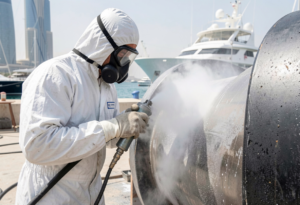
Dry Ice in Marine Operations plays a strong role in modern cleaning processes. One advanced method is dry ice blasting. Dry ice blasting uses compressed air to propel small dry ice pellets at high speed onto surfaces. The impact removes dirt, grease, and contaminants without damaging the base material.
This process works because of extreme cold and rapid sublimation. When the dry ice pellets hit a surface, they freeze the contaminants. The sudden temperature drop causes dirt and coatings to crack and separate. At the same time, the dry ice turns into gas and lifts debris away. Since the pellets sublimate instantly, they leave no secondary waste behind.
Traditional cleaning methods often use water, sand, or chemical solvents. Water can promote rust in marine environments. Sandblasting creates abrasive waste and requires long cleanup times. Chemical cleaners may introduce environmental hazards. Dry ice blasting avoids these problems because it is non-abrasive and moisture-free.
Engine rooms, electrical panels, and hydraulic systems benefit greatly from this method. Crews can clean sensitive components without disassembling large sections of equipment. This reduces downtime and lowers labor costs. Faster maintenance means vessels return to service sooner.
In shipyards and repair facilities in Al Jaddaf, efficiency is essential. Dry ice cleaning supports strict maintenance schedules while improving safety and environmental compliance. It delivers precision cleaning without damaging expensive marine equipment.
Enhancing Safety and Compliance in Marine Environments
Safety standards in offshore and marine industries remain strict. Regulatory bodies require operators to maintain clean environments, protect cargo integrity, and prevent contamination. Dry Ice in Marine Operations supports these goals in multiple ways.
First, dry ice reduces slip hazards. Traditional ice melts into water, which can pool on decks and in storage areas. Wet surfaces increase the risk of falls, especially on moving vessels. Since dry ice sublimates directly into gas, it leaves surfaces dry. This improves workplace safety.
Second, dry ice helps control bacteria and contamination risks. Extremely low temperatures slow microbial growth. This supports hygiene standards when transporting food or medical supplies. Maintaining proper temperature protects crew health and meets international shipping regulations.
Environmental compliance also matters in modern marine operations. Many ports and shipyards aim to reduce water waste and chemical discharge. Dry ice cleaning produces no wastewater and uses no harsh solvents. This reduces environmental impact and simplifies disposal procedures.
Another safety advantage involves electrical systems. Cleaning electrical panels with water or liquid cleaners can create short circuits or corrosion. Dry ice blasting allows safe cleaning of energized equipment because it does not conduct electricity and leaves no moisture.
In a busy maritime zone like Al Jaddaf, meeting safety and environmental standards protects both reputation and operations. Dry ice provides a reliable, compliant solution that supports modern marine regulations.
Dry Ice in Emergency Response and Contingency Planning
Marine operations face unexpected challenges. Equipment failures, power outages, cargo delays, and extreme weather can disrupt normal cooling systems. Offshore platforms and vessels must prepare for these risks with strong contingency plans.
Dry Ice in Marine Operations serves as a reliable backup cooling solution during emergencies. If refrigeration systems fail, crews can quickly use stored dry ice to protect temperature-sensitive cargo. This prevents spoilage and reduces financial loss.
Dry ice requires no electricity to maintain its cooling effect. This makes it ideal during power outages at sea or in port facilities. Crews can place dry ice in insulated containers to stabilize temperatures while repairs take place. This simple action can protect food supplies, medical kits, and laboratory materials.
Emergency medical situations also benefit from dry ice. Some treatments and biological materials require ultra-cold storage. Dry ice ensures safe transport from shore facilities to offshore platforms when rapid response is necessary. Its strong cooling capacity helps maintain strict temperature thresholds.
In hazardous material incidents, dry ice can assist with controlled cooling. Lowering temperatures can slow chemical reactions and reduce vapor release. This supports safer containment during critical situations.
Preparedness is essential in offshore environments where help may be hours away. Having dry ice available as part of contingency planning strengthens operational resilience. It gives marine operators in Al Jaddaf a dependable tool when standard systems fail.
Sustainability Benefits for Modern Marine Operations
Sustainability has become a priority across global maritime industries. Operators aim to reduce waste, lower emissions, and improve environmental performance. Dry Ice in Marine Operations aligns well with these goals.
Dry ice consists of recycled carbon dioxide captured from industrial processes. Instead of releasing this gas directly into the atmosphere, manufacturers convert it into solid form. This reuse supports carbon management efforts and reduces environmental impact.
Dry ice also eliminates water waste. Traditional cleaning methods use large amounts of water and chemicals. In marine environments, wastewater must be carefully managed to prevent pollution. Dry ice cleaning produces no liquid runoff, which simplifies environmental compliance.
Reducing equipment downtime also supports sustainability. Efficient cleaning and temperature control prevent premature equipment replacement. When machinery lasts longer, companies reduce material waste and resource consumption.
Fuel efficiency improves as well. By using dry ice for short-term cooling, vessels can reduce reliance on fuel-powered refrigeration units. Lower fuel consumption means reduced greenhouse gas emissions.
In maritime hubs like Al Jaddaf, where modernization continues to shape infrastructure, sustainable solutions create long-term value. Dry ice supports cleaner operations while maintaining high performance standards.
Conclusion
Marine and offshore operations demand strong temperature control, strict safety standards, and efficient maintenance practices. In challenging coastal climates like Al Jaddaf, reliable solutions are essential.
Dry Ice in Marine Operations delivers powerful cooling without moisture, supports precision equipment cleaning, enhances safety compliance, and strengthens emergency preparedness. Its ability to sublimate without leaving residue makes it uniquely suited for marine environments.
From supply chain management to vessel maintenance and sustainability goals, dry ice continues to support modern maritime operations. As offshore activities expand, its role will likely grow even further.