
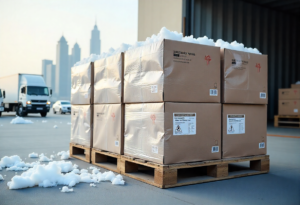
Navigating the demanding climate of Dubai requires innovative solutions for temperature-sensitive logistics. When your products demand a consistently sub-zero environment, standard refrigerated shipping often falls short. Dry ice, or solid carbon dioxide, emerges as the definitive answer for safe and reliable cold transport across the emirate and beyond. This powerful cooling agent maintains temperatures as low as -78.5°C (-109.3°F), ensuring the integrity of perishable and sensitive goods. Understanding its proper use is not just a logistical advantage but a critical requirement for businesses in pharmaceuticals, biotechnology, and high-end food services. This guide delves into the essential knowledge for leveraging dry ice in Dubai, focusing on safety protocols, regulatory compliance, and operational best practices to guarantee your shipments arrive in pristine condition.
Understanding Dry Ice: The Foundation of Sub-Zero Shipping
Dry ice is not frozen water. It is the solid state of carbon dioxide (CO2), a gas naturally present in our atmosphere. This fundamental distinction is crucial for safe handling and effective use in shipping. Manufacturers create dry ice by pressurizing and cooling liquid CO2 until it expands into a snowy solid, which they then compress into blocks, pellets, or slices. The most critical property of dry ice is sublimation. Unlike regular ice that melts into a liquid, dry ice transforms directly from a solid into a gas. This sublimation process is what provides its intense cooling power without leaving any watery residue, a key benefit for shipping moisture-sensitive items.
Because it sublimes into carbon dioxide gas, proper ventilation becomes a non-negotiable aspect of handling. In confined, unventilated spaces, the released CO2 can displace oxygen, posing a significant asphyxiation hazard. This makes storage and transport protocols paramount. For shipping purposes, the sublimation rate dictates your packing strategy. A standard block of dry ice sublimates at a rate of roughly five to ten pounds every twenty-four hours, though this rate accelerates in warmer environments. You must calculate the correct quantity of dry ice based on your shipment’s duration, the insulation quality of your container, and the required internal temperature. Always remember that direct skin contact with dry ice causes severe frostbite-like injuries in seconds, necessitating the use of insulated gloves and protective equipment during any handling procedure.
Why Dry Ice is the Superior Choice for Dubai’s Logistics
Dubai’s extreme ambient temperatures, which regularly exceed 40°C (104°F) for much of the year, create a formidable challenge for cold chain logistics. Standard gel packs or refrigerated units often struggle to maintain deeply frozen temperatures against such intense external heat. Dry ice provides a superior solution due to its exceptionally low temperature of -78.5°C (-109.3°F). This allows it to create and sustain a deeply frozen environment inside a well-insulated container, effectively fighting off the external thermal load of a Dubai summer. The sublimation property also means there is no liquid runoff that could damage other packages or create a mess upon delivery, a clean advantage for carriers and recipients.
The reliability of dry ice directly translates to extended transit times without the need for electrical power. This makes it the only viable option for shipping temperature-sensitive products via standard courier services or air freight, where active refrigeration is unavailable. For businesses exporting perishable goods like premium seafood, molecular gastronomy ingredients, or critical vaccines from Dubai, dry ice is often the mandated packing material by international carriers. Its use ensures product integrity from pickup in Jebel Ali to delivery in distant markets. Furthermore, for last-mile delivery within the UAE’s urban landscape, where a van’s cargo area can become exceptionally hot, a small cooler with dry ice offers a fail-safe method to guarantee a product arrives frozen. This reliability safeguards your product quality and protects your brand’s reputation for delivering on promise.
The Science of Safe Handling: Sublimation and Ventilation
Mastering the safe handling of dry ice hinges on a clear understanding of its physical behavior, primarily sublimation and gas displacement. As previously noted, sublimation is the direct transition from solid to gas. This process absorbs a massive amount of heat from the immediate surroundings, which is the source of the intense cooling. However, this same process releases carbon dioxide gas in volumes approximately 800 times greater than the solid’s volume. In a sealed, small space like a vehicle cabin, walk-in cooler, or storage room, this rapid gas release can dangerously lower oxygen levels before anyone notices. Symptoms of oxygen deprivation include dizziness, confusion, rapid breathing, and ultimately loss of consciousness. Therefore, you must always store and transport dry ice in well-ventilated areas. Never place it in airtight containers, as the pressure buildup from subliming gas could cause an explosion.
For shipping, this science dictates specific container choices. You must use insulated shippers, like expanded polystyrene (EPS) foam boxes, that are sturdy and well-sealed but not airtight. Commercial dry ice shippers often include vented lids or panels that allow the CO2 gas to escape slowly without compromising thermal efficiency. Packing strategy also relies on this science. You should place the dry ice at the bottom of the container or wrap it in a paper layer, with your product positioned above it. Since cold air sinks and CO2 is denser than air, this setup creates a stable, cold environment that envelops your goods. Monitoring is another critical component. Using a data logger inside the shipment verifies that the temperature remained within the required range throughout transit, providing proof of chain of custody integrity for sensitive commodities like clinical trial materials or high-value biologics.
Regulatory Compliance: Navigating Dubai’s Transport Guidelines
Successfully shipping with dry ice in Dubai requires strict adherence to local and international transportation regulations. Dry ice is classified as a “Miscellaneous Dangerous Good” (Class 9) under International Air Transport Association (IATA) and International Civil Aviation Organization (ICAO) regulations, which govern air freight from hubs like Dubai International (DXB) and Al Maktoum International (DWC). These rules exist for the safety of aircraft, crew, and ground handling staff. Key requirements include clear and accurate labeling on the outer package. Every box containing dry ice must display a “Class 9 Miscellaneous” hazard label and a specific “Dry Ice” or “Carbon Dioxide, Solid” label. The net weight of the dry ice must be marked prominently, and this weight must be updated for each leg of the journey if the shipment is repacked.
Furthermore, anyone who prepares, offers, or accepts a dry ice shipment must have completed current IATA Dangerous Goods Regulations training. This is not a suggestion but a mandatory condition for airlines and reputable couriers. The shipping paperwork, particularly the Air Waybill, must contain explicit declarations. You must state the proper shipping name (“Carbon Dioxide, Solid, 9, UN 1845”), the number of packages, and the total net quantity of dry ice per package. Within the UAE, road transport also follows specific guidelines from authorities like the Dubai Municipality and the UAE Ministry of Climate Change and Environment. These may dictate vehicle ventilation standards and driver awareness training for commercial transport. Non-compliance does not just risk shipment rejection; it can lead to significant fines and legal liability. Partnering with a knowledgeable logistics provider ensures every step, from packaging to documentation, meets the stringent legal framework.
Selecting the Right Packaging for Maximum Efficacy
Choosing the correct packaging is the single most important factor that determines the success or failure of your dry ice shipment. The package acts as a thermal barrier, slowing down the sublimation rate and protecting both the product and handlers. The industry standard for small to medium shipments is an insulated container made of expanded polystyrene (EPS) foam. This material provides an excellent balance of thermal resistance, lightweight structure, and cost-effectiveness. For larger shipments or extended transit times, you may require a polyurethane (PU) foam container or a vacuum-insulated panel (VIP) box, which offer superior insulation but at a higher cost. The container must be sized appropriately; too much empty space allows cold air to circulate inefficiently and accelerates dry ice loss, while an over-packed box can restrict necessary gas venting.
Beyond the outer shipper, internal packing materials play a crucial role. You should never allow your product to make direct contact with dry ice, as the extreme cold will damage most items. Use cardboard, bubble wrap, or foam sheets to create a buffer layer. For optimal cold distribution, many professionals recommend placing the dry ice at the bottom or top of the payload, depending on the specific container design, and surrounding the product with appropriate void fill that does not absorb moisture. Securing all items inside the box is vital to prevent movement during transit, which could damage the insulation or the product itself. Finally, you must clearly label the package with all necessary hazard labels, “Perishable” stickers, “This End Up” indicators, and recipient information. A well-packed shipment maximizes cooling efficiency, ensures regulatory compliance, and delivers a professional unboxing experience for your client.
Partnering with a Professional Dry Ice Provider in Dubai
Sourcing dry ice from a reliable, professional provider in Dubai is a strategic business decision that impacts your operational reliability and compliance. A reputable provider does more than just sell blocks of CO2; they offer a full spectrum of services critical for secure cold chain logistics. First and foremost, they guarantee a consistent and high-quality supply of food-grade or industrial-grade dry ice, tailored into your preferred form factor like blocks, pellets, or slices. They understand local demand cycles and can ensure availability even during peak periods, which is essential for businesses with time-sensitive shipments. Furthermore, a professional provider possesses in-depth knowledge of the local regulatory landscape and can offer certified documentation and advice for your specific shipping route, whether it’s domestic delivery within the UAE or international export.
A true partner adds value through logistical support and expert consultation. Many top providers offer just-in-time delivery services to your facility, minimizing the time you store the dry ice and reducing waste from sublimation before use. They can also supply all the necessary compliant packaging materials, including UN-certified outer boxes, insulated liners, and hazard labels, creating a one-stop-shop solution. Their expertise becomes invaluable when you face a unique shipping challenge, such as a new destination with unfamiliar regulations or a product with an exceptionally strict temperature tolerance. By building a relationship with an expert provider, you gain a trusted advisor who helps you optimize quantities, improve packing techniques, and navigate the complexities of dangerous goods paperwork. This partnership ultimately de-risks your cold chain, protects your valuable cargo, and enhances your brand’s reputation for reliable delivery.
Common Applications: From Pharmaceuticals to Gourmet Foods
Dry ice serves as the backbone of cold chain logistics for a diverse range of industries in Dubai, where precision and reliability are non-negotiable. The pharmaceutical and biomedical sectors represent one of the most critical application areas. Temperature-sensitive products like vaccines, insulin, specialty biologics, and clinical trial samples require an unbroken, ultra-cold environment to maintain their efficacy and safety. Dry ice is often the only substance capable of providing the necessary -70°C to -80°C temperature range for these sensitive shipments during air transport. Similarly, the food and beverage industry relies heavily on dry ice for exporting premium perishables. Dubai’s position as a gourmet hub means local businesses regularly ship high-value items like fresh seafood, camel milk products, premium cuts of meat, and gourmet desserts to international markets. Dry ice ensures these goods arrive in a perfectly frozen state, preserving taste, texture, and most importantly, safety.
Beyond these primary uses, innovative applications continue to grow across Dubai’s economy. The thriving hospitality sector uses dry ice for spectacular culinary presentations and creating fog effects for events and weddings, though this involves different handling protocols. Laboratories and research facilities depend on it for preserving samples and for use in specific scientific processes. Even the floral industry uses it to keep exotic, delicate flowers cold during long-haul transport to maintain their bloom. E-commerce businesses selling specialty frozen foods directly to consumers within the UAE also utilize small, dry ice-cooled packages for last-mile delivery. In every case, the common thread is the uncompromising need for a powerful, reliable, and residue-free cooling agent that can perform under the extreme external pressures of the regional climate, making dry ice an indispensable tool for modern commerce.
Conclusion
Implementing dry ice for shipping in Dubai transforms a significant logistical challenge into a manageable, reliable process. The journey requires a firm understanding of the material’s unique scientific properties, a strict commitment to safety and handling protocols, and meticulous attention to packaging and regulatory compliance. From ensuring life-saving pharmaceuticals remain potent to delivering world-class gourmet experiences to global customers, dry ice provides the definitive cold transport solution. The extreme local climate makes its superior cooling capacity not just an advantage but a necessity for businesses operating at an international standard. Success ultimately depends on treating dry ice with the respect its powerful nature demands and partnering with experts who can navigate the complex landscape. By mastering these elements, your business can achieve a seamless, safe, and reliable cold chain, building trust and ensuring quality from your Dubai facility to the end user’s door.