
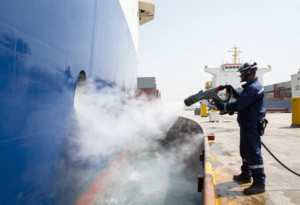
Marine environments demand constant cleaning and maintenance. Saltwater, fuel residue, algae, and corrosion build up quickly on vessels and offshore structures. Traditional cleaning methods often create waste, dust, and chemical runoff that can harm the environment. This concern has increased demand for Dry Ice in the UAE Maritime Sector as a cleaner alternative.
The UAE stands as a global maritime hub with strict environmental standards. Ports, offshore platforms, and shipyards must balance operational efficiency with sustainability goals. Dry ice cleaning offers a solution that supports both. It removes contaminants effectively while reducing waste and pollution.
The Need for Eco-Friendly Marine Cleaning in the UAE
The UAE’s coastal infrastructure plays a vital role in trade and energy. Major ports such as Jebel Ali Port handle large volumes of cargo and vessels daily. Offshore energy facilities also operate across the region, especially near Abu Dhabi. These operations require regular cleaning to maintain safety and performance.
Marine cleaning involves removing rust, marine growth, grease, and old coatings from surfaces. Without proper cleaning, corrosion spreads quickly. Corrosion means the gradual destruction of metal due to chemical reactions, often caused by salt and moisture. If left untreated, it weakens structural integrity and increases repair costs.
Traditional cleaning methods present environmental challenges. Sandblasting creates large amounts of abrasive waste. Chemical solvents may leave toxic residue. High-pressure water systems can wash pollutants into nearby waters. In sensitive marine ecosystems, this runoff may affect water quality and marine life.
Because of these concerns, maritime authorities encourage sustainable maintenance practices. Companies now seek solutions that reduce environmental impact while maintaining high cleaning standards. Dry Ice in the UAE Maritime Sector supports this shift toward greener operations.
Dry ice blasting uses solid carbon dioxide pellets to clean surfaces. When these pellets strike a surface, they remove contaminants without creating secondary blasting waste. The pellets sublimate, which means they turn directly from solid to gas. This process leaves only the removed debris behind for collection.
This technology helps marine operators reduce landfill waste and limit chemical exposure. It also supports compliance with UAE environmental regulations, which aim to protect coastal waters and port areas.
Environmental Challenges in Coastal and Port Areas
Coastal regions experience constant exposure to salt, humidity, and industrial activity. Ships release exhaust, cargo handling produces dust, and maintenance tasks generate debris. Over time, these factors increase contamination levels in port environments.
Busy maritime centers such as Dubai require strict pollution control. Authorities monitor waste disposal, water discharge, and air quality. Marine service companies must adopt methods that align with these standards.
Dry ice cleaning reduces airborne dust compared to abrasive blasting. It also eliminates wastewater runoff, which protects surrounding marine ecosystems.
Limitations of Traditional Marine Cleaning Methods
Abrasive blasting removes rust effectively, but it can damage the base material. Repeated abrasion weakens thin steel panels and delicate components. Chemical cleaning may leave residue that interferes with new coatings.
Water-based cleaning introduces moisture into engine rooms and electrical systems. Excess moisture accelerates corrosion and may cause equipment failure. In contrast, dry ice cleaning produces no water or chemical residue.
As sustainability becomes a priority across the UAE, marine companies recognize the value of dry ice technology. It combines effective surface preparation with environmental responsibility.
How Dry Ice Cleaning Works in Maritime Applications
Dry ice cleaning relies on three main effects: kinetic impact, thermal shock, and sublimation. Kinetic impact refers to the force created when dry ice pellets hit a surface. Thermal shock occurs because dry ice is extremely cold, around minus 78 degrees Celsius. This sudden temperature change causes contaminants to contract and loosen.
When pellets strike the surface, they penetrate small cracks and lift dirt, grease, or coatings. The extreme cold weakens the bond between the contaminant and the base material. At the same time, the pellets instantly turn into carbon dioxide gas. This rapid expansion helps push debris away from the surface.
Because dry ice sublimates, it leaves no moisture behind. This makes it ideal for cleaning sensitive marine equipment such as engines, control panels, and wiring systems. Technicians can clean in place without dismantling complex machinery.
Dry Ice in the UAE Maritime Sector supports both routine maintenance and large-scale refurbishment projects. Ship hulls, decks, cargo holds, and offshore platforms all benefit from residue-free cleaning.
The process also improves worker safety. Crews avoid handling large volumes of abrasive media or harsh solvents. Proper ventilation ensures that carbon dioxide levels remain within safe limits during operation.
By combining effective cleaning with environmental protection, dry ice technology continues to gain adoption across UAE ports and offshore facilities.
Environmental Benefits of Dry Ice in the UAE Maritime Sector
Sustainability has become a core focus across the UAE’s maritime industry. Ports, offshore facilities, and shipyards must reduce pollution while maintaining high operational standards. Dry Ice in the UAE Maritime Sector supports this goal by offering a low-impact cleaning solution.
One major environmental benefit involves waste reduction. Traditional abrasive blasting creates large volumes of sand or grit waste. Crews must collect and dispose of this material properly. Dry ice pellets sublimate into carbon dioxide gas after impact. Sublimation means a solid changes directly into gas without becoming liquid. This process leaves no secondary blasting media behind.
Reduced waste lowers landfill use and simplifies cleanup operations. Marine companies spend less time managing disposal logistics. This efficiency also reduces the environmental footprint of maintenance projects.
Water conservation presents another advantage. High-pressure washing systems consume significant amounts of water. Contaminated runoff may enter drainage systems and nearby coastal waters. In sensitive maritime zones such as Jebel Ali Port, controlling discharge remains critical. Dry ice cleaning uses no water, which eliminates runoff risk.
Air quality also improves compared to traditional blasting. Abrasive methods release dust particles into the air. These particles can spread across dock areas and affect nearby operations. Dry ice blasting produces minimal airborne dust, which helps maintain safer working conditions.
Because dry ice cleaning avoids chemical solvents, it reduces exposure to harmful substances. Crews handle fewer hazardous materials, and surrounding ecosystems face lower contamination risk. This aligns with UAE sustainability strategies and global environmental standards.
Reduced Waste and Zero Secondary Contamination
The absence of secondary waste represents a major advantage. After cleaning, technicians only remove loosened contaminants such as rust, grease, or paint chips. There is no leftover blasting media mixed with debris.
This simplifies waste separation and disposal. It also reduces the overall environmental impact of maintenance tasks. Cleaner operations support long-term environmental protection goals across the maritime sector.
Lower Water Usage and Pollution Control
Water scarcity remains a concern in arid regions. Dry ice blasting eliminates the need for water-intensive cleaning methods. By preventing contaminated runoff, it protects marine ecosystems and port infrastructure.
This responsible approach strengthens the environmental reputation of UAE marine operators.
Operational Advantages for UAE Marine Companies
Efficiency remains essential in busy maritime hubs. Ships must return to service quickly to avoid financial losses. Dry Ice in the UAE Maritime Sector helps reduce downtime and improve maintenance speed.
Dry ice blasting allows in-place cleaning. Technicians often clean engines, turbines, and structural components without dismantling them. This saves labor hours and shortens project timelines. Faster cleaning means quicker turnaround for vessels undergoing maintenance.
Non-abrasive cleaning protects valuable equipment. Unlike sandblasting, dry ice does not erode metal surfaces. This preserves surface profile and structural integrity. Maintaining the correct surface profile improves coating adhesion and extends service life.
Precision also improves. Dry ice streams reach tight corners and complex geometries. This allows thorough cleaning of engine rooms and confined spaces. Better cleaning results in improved inspection accuracy and higher repair quality.
Worker safety strengthens operational performance as well. Reduced dust and chemical exposure lower health risks. Crews operate in cleaner environments, which improves productivity and morale.
In competitive ports such as Dubai, operational efficiency provides a clear advantage. Shipyards and marine contractors that adopt advanced cleaning technologies position themselves as industry leaders.
By combining environmental responsibility with technical efficiency, dry ice cleaning supports both sustainability and profitability in the UAE maritime sector.
Applications Across the UAE Maritime Industry
Dry Ice in the UAE Maritime Sector serves a wide range of marine applications. From commercial shipping to offshore energy, companies rely on this method to maintain safety and performance standards.
Ship hull and deck cleaning represents one of the most common uses. Marine growth, salt deposits, and old paint layers build up quickly in coastal waters. Dry ice blasting removes these contaminants without damaging the underlying steel. This prepares surfaces for repainting and protective coatings while preserving structural integrity.
Engine rooms also benefit from dry ice cleaning. These confined spaces contain wiring systems, hydraulic lines, and precision components. Water-based or chemical cleaning methods may damage sensitive parts. Dry ice provides residue-free cleaning without introducing moisture. Technicians can remove grease, oil, and carbon deposits safely.
Cargo holds and storage tanks require strict contamination control. Dry ice blasting removes residue from previous cargo without leaving chemical traces behind. This ensures safe preparation for the next shipment and protects cargo quality.
Offshore platforms and support vessels near Abu Dhabi use dry ice for structural maintenance. Harsh marine conditions accelerate corrosion and buildup. Dry ice cleaning allows crews to restore surfaces efficiently without generating large volumes of waste.
Ship repair yards in major hubs such as Dubai integrate dry ice into refurbishment and retrofitting projects. The ability to clean equipment in place reduces downtime and supports faster project completion.
As maritime infrastructure continues to expand across the UAE, advanced cleaning technologies play a vital role. Dry ice supports maintenance standards across commercial, offshore, and industrial marine sectors.
Conclusion
Marine cleaning demands solutions that balance performance with environmental responsibility. Traditional methods often generate waste, dust, and chemical runoff. Dry Ice in the UAE Maritime Sector offers a modern alternative that addresses these concerns effectively.
Dry ice blasting removes rust, grease, marine growth, and old coatings without creating secondary waste. It reduces water use, limits airborne dust, and eliminates harsh chemicals. These advantages align with strict UAE environmental standards and sustainability goals.
Operational efficiency also improves. Marine companies benefit from faster cleaning, reduced downtime, and protection of sensitive equipment. Non-abrasive and residue-free cleaning preserves structural integrity and enhances long-term performance.
As the UAE strengthens its position as a global maritime leader, eco-friendly maintenance solutions will remain essential. Dry ice cleaning stands out as a safe, efficient, and sustainable choice for modern marine operations.