
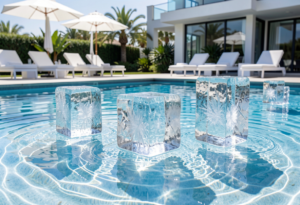
Outdoor pool events during summer can feel uncomfortable when water temperatures rise too high. Guests expect cool and refreshing water, especially during daytime parties, hotel gatherings, or private celebrations. However, strong sunlight and high air temperatures can quickly warm pool water beyond comfort levels. This is where Ice Blocks for Pools offer a simple and effective solution.
Ice blocks provide fast, temporary cooling without complex equipment. Event organizers and hotel managers often use them to maintain guest comfort during peak heat hours. When used correctly, ice blocks help stabilize water temperature and improve the overall event experience.
Why Pool Temperature Rises Quickly During Summer Events
Pool water absorbs heat from direct sunlight throughout the day. During summer, air temperatures can exceed 40°C in regions such as Dubai and Abu Dhabi. Continuous exposure to sunlight causes water molecules to gain energy, which increases overall water temperature.
Large gatherings also contribute to rising pool temperatures. When many guests enter the pool, body heat transfers into the water. This effect becomes noticeable during crowded events. Over time, the combined impact of sunlight and human activity can make pool water feel warm rather than refreshing.
Pool surfaces and surrounding materials also play a role. Concrete decks and nearby structures absorb heat during the day. That stored heat radiates back into the water. Limited water circulation can worsen the problem because stagnant water retains heat longer.
For event planners, overheated pool water creates discomfort. Guests may avoid swimming if the water feels too warm. This reduces engagement and affects the overall success of the event. Maintaining optimal pool temperature becomes essential for guest satisfaction.
Ice Blocks for Pools provide a practical way to counter this heat buildup. Unlike permanent cooling systems, ice blocks offer immediate relief during short-term events. They help restore comfort quickly without requiring mechanical modifications.
The Impact of Heat and Sunlight on Pool Water
Sunlight transfers heat into pool water through radiation. Radiation means energy travels from the sun directly into the water. Clear skies and long daylight hours increase this effect. Dark pool liners absorb more heat, which further raises temperature levels.
High humidity also reduces natural cooling. Normally, evaporation helps cool water surfaces. When humidity rises, evaporation slows down. This limits the pool’s natural ability to cool itself.
As a result, pool water temperature may climb several degrees within a few hours during peak summer conditions.
Why Overheated Pools Affect Guest Comfort
Most guests prefer pool water temperatures between 26°C and 29°C. When temperatures exceed 32°C, the water may feel uncomfortable and heavy. Instead of refreshing swimmers, it may increase fatigue.
Warm water also reduces the cooling effect on the body. During summer events, guests rely on pools to escape the heat. If the pool fails to provide relief, overall event satisfaction may decline.
By managing water temperature effectively, organizers improve guest experience and maintain a pleasant environment.
How Ice Blocks for Pools Work to Reduce Water Temperature
Ice blocks cool pool water through heat exchange. Heat exchange means heat moves from a warmer substance to a colder one. When ice enters warm pool water, heat flows from the water into the ice. This process causes the ice to melt while lowering the water temperature.
Large ice blocks melt more slowly than small cubes. This makes them suitable for gradual cooling during events. As the ice melts, it absorbs significant heat energy. This helps stabilize water temperature over several hours.
The cooling effect depends on pool size, current temperature, and the amount of ice used. Event planners calculate the required quantity based on these factors. Using too little ice may provide limited results, while excessive ice may cool the water too quickly.
Ice Blocks for Pools work best when distributed evenly across the pool. Proper circulation ensures balanced cooling. Pool pumps help spread cooler water throughout the swimming area.
Because ice is simply frozen water, it does not introduce chemicals into the pool. This makes it safe when handled properly. However, organizers must ensure the ice is clean and suitable for pool use.
This method provides temporary cooling. It works well for single-day events or peak heat periods. For long-term temperature control, mechanical chillers may offer better consistency. Still, ice blocks remain a practical and affordable solution for short-term needs.
Benefits of Using Ice Blocks for Pools at Events
Event organizers choose Ice Blocks for Pools because they provide fast and visible results. When water temperature rises unexpectedly, ice blocks offer immediate cooling without complex installation. This flexibility makes them ideal for weddings, corporate events, hotel pool parties, and private celebrations.
One major benefit involves speed. Mechanical chillers require setup time and energy consumption. Ice blocks, on the other hand, can be delivered and placed in the pool within minutes. As they melt, they begin absorbing heat right away. This quick response helps maintain guest comfort during peak afternoon hours.
Cost efficiency also makes ice blocks attractive. Renting or installing pool cooling systems can increase event expenses. Ice blocks offer a temporary and budget-friendly alternative. Organizers can adjust the quantity based on pool size and expected attendance.
Another advantage involves ease of use. Staff members can distribute blocks evenly across the pool. Proper circulation from the pool pump spreads cooler water throughout the swimming area. This ensures consistent temperature reduction without manual stirring or intervention.
Ice blocks also provide flexibility. Event planners can use them only when necessary. For example, during evening events in hot cities such as Dubai, organizers may add ice blocks just before guests enter the pool. This targeted cooling prevents unnecessary energy use.
Hygiene remains manageable because ice is simply frozen water. When sourced from clean and safe suppliers, it does not introduce harmful chemicals. However, organizers must ensure the ice comes from potable water sources to maintain water quality.
From a guest experience perspective, cooler water enhances enjoyment. Swimmers feel refreshed rather than overheated. This improves overall event satisfaction and encourages longer pool engagement.
Fast and Temporary Cooling Solution
Ice blocks act as a short-term cooling method. They work best during single-day events or specific high-temperature periods. Because they melt gradually, they provide cooling for several hours without constant monitoring.
This temporary nature gives planners control. They can repeat the process only when needed, which keeps operations simple and efficient.
Cost-Effective and Easy to Deploy
Compared to installing a permanent chiller, ice blocks require minimal equipment. Delivery, placement, and distribution remain straightforward. This reduces labor costs and planning complexity.
For hotels and resorts in regions such as Abu Dhabi, ice blocks provide a practical solution during peak tourist seasons when pools experience high usage.
Best Practices for Using Ice Blocks Safely
Using Ice Blocks for Pools requires proper planning to ensure safety and balanced cooling. Placement plays a key role in achieving even temperature reduction. Staff should distribute blocks across different pool areas rather than placing them in one spot. This prevents localized cold zones.
Organizers should also consider pool size and depth. Larger pools require more ice to create noticeable cooling. Smaller pools need careful monitoring to avoid excessive temperature drops. Gradual addition works better than placing all ice at once.
Pool circulation systems must remain active during the process. Pumps help distribute cooler water evenly. Without circulation, cooling may stay limited to areas near the ice blocks.
Safety precautions matter as well. Large ice blocks can be slippery or hard, so staff should add them before guests enter the pool. This prevents accidental contact or injury. Clear communication ensures swimmers remain safe.
Hygiene remains critical. Ice must come from clean, potable water sources. Organizers should avoid using ice intended for industrial purposes. Maintaining water chemistry balance also matters. After significant ice melting, staff should test chlorine and pH levels to ensure they remain within safe ranges.
Event planners should also monitor overall water temperature. The goal is to restore comfort, not create cold shock. Controlled cooling improves guest experience while maintaining safety.
By following these best practices, organizers can use ice blocks effectively and responsibly. Proper planning ensures safe, balanced, and enjoyable pool conditions during summer events.
When to Use Ice Blocks Instead of Mechanical Cooling
Ice Blocks for Pools work best in specific situations where temporary cooling meets the need. Short-term summer events such as weddings, corporate pool parties, or hotel promotions often require only a few hours of temperature control. In these cases, ice blocks provide a practical and fast solution.
Private villas and boutique hotels in hot climates, especially in cities like Dubai, may not have built-in pool chillers. Installing a permanent cooling system can be costly and unnecessary for occasional events. Ice blocks allow property owners to manage water temperature without major upgrades.
Ice blocks also help during sudden heatwaves. If temperatures rise unexpectedly, organizers can respond quickly. This flexibility makes them ideal for event planners who must adapt to changing weather conditions.
However, it is important to understand their limitations. Ice blocks provide temporary cooling only. Large commercial pools may require significant quantities of ice to achieve noticeable results. For long-term temperature management, mechanical chillers offer more consistent performance.
Event planners should also consider timing. Adding ice too early may reduce its effectiveness by the time guests arrive. Strategic placement shortly before peak usage ensures maximum benefit.
When used correctly, ice blocks serve as a reliable short-term cooling strategy. They complement, rather than replace, permanent cooling systems in large facilities.
Conclusion
Summer pool events can quickly become uncomfortable when water temperatures rise beyond refreshing levels. Strong sunlight, high air temperatures, and guest activity all contribute to heat buildup. Ice Blocks for Pools provide a simple and effective way to manage this challenge.
By absorbing heat as they melt, ice blocks lower water temperature through natural heat exchange. They offer fast, affordable, and flexible cooling for short-term events. When distributed properly and sourced from clean water, they maintain both safety and hygiene standards.
For hotels, event planners, and private property owners in hot regions, ice blocks represent a practical solution during peak summer months. While they do not replace permanent chillers, they provide reliable temporary relief when it matters most.
With proper planning and monitoring, ice blocks help create a more enjoyable and refreshing pool experience for guests during summer events.