
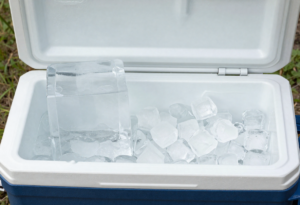
Keeping food and drinks cold outdoors can feel like a challenge. Whether you pack for camping, fishing, tailgating, or a beach day, your cooler must hold ice that lasts. The real question is simple: should you use ice blocks or ice cubes?
Many people choose ice without thinking about how it melts or how long it stays cold. The truth is that the type of ice you use can change how well your cooler performs. In this guide, we compare both options and explain when ice blocks for coolers make the most sense.
By the end, you will know which option fits your trip, your cooler size, and your budget.
Ice Blocks for Coolers: How They Work
Ice blocks for coolers melt slower than small ice cubes. This happens because large blocks have less surface area exposed to warm air. Surface area means the outer part of the ice that touches heat. The less surface area exposed, the slower the melting process.
When you place a large ice block inside a cooler, it acts like a steady cold source. It keeps temperatures low for a longer time without turning into water quickly. This makes ice blocks ideal for multi-day camping trips or long road travel.
Large blocks also help control moisture inside the cooler. Since they melt slowly, they create less water at first. Less water means your food stays dry longer. Wet packaging can weaken and leak, especially with paper or cardboard. Ice blocks reduce that risk.
Another benefit is temperature stability. Ice blocks cool gradually and maintain a consistent temperature. Ice cubes cool quickly at first but lose strength as they melt. If you need reliable cooling for raw meat, dairy, or frozen items, ice blocks offer better long-term control.
However, ice blocks take up more space. You must plan your packing carefully. Place them at the bottom or along the sides of the cooler. Cold air moves downward, so positioning matters. Smart placement improves performance without wasting space.
Ice blocks also work well when combined with other cooling methods. Some campers freeze water bottles to create custom ice blocks. As the ice melts, you gain drinking water instead of wasted cooler water. This simple trick improves efficiency and reduces mess.
For longer trips, ice blocks for coolers often outperform small cubes. They last longer, reduce water buildup, and provide steady cooling power.
Why Ice Cubes Are Popular for Short Trips
Ice cubes remain popular because they are easy to find and simple to use. Most grocery stores sell bagged ice, and many homes have ice makers. This makes cubes convenient for last-minute trips.
Ice cubes cool items quickly because they spread across the cooler. Their small size allows them to fill gaps between drinks and food. This increases contact with items, which speeds up cooling. If you need drinks cold fast, cubes work well.
Cubes also adapt to tight spaces. You can pour them into small coolers without adjusting your packing plan. They settle around items and create even coverage. This flexibility makes them perfect for day trips, picnics, or sporting events.
However, cubes melt faster due to higher surface area. More surface area means more contact with warm air. As a result, they turn into water sooner than large blocks. For short outings, this may not matter. For overnight trips, it becomes a problem.
Water buildup from melting cubes can soak food quickly. You may need to drain the cooler often to maintain performance. Frequent draining allows warm air inside, which speeds up melting even more. This cycle reduces cooling time.
Ice cubes also require replenishing. If your trip lasts more than one day, you must buy more ice. That adds cost and effort. For quick events, cubes remain practical. For extended storage, they fall short compared to ice blocks.
Both options have strengths. The right choice depends on how long you need cooling and how you pack your cooler.
Cooling Duration: Which Lasts Longer?
Cooling duration is the most important factor when choosing between ice blocks and ice cubes. If your ice melts too fast, your food warms quickly. This can spoil meat, dairy, and other perishable items.
Ice blocks for coolers last longer because of their size and density. Density refers to how tightly packed the ice particles are. A large block melts from the outside inward at a slow rate. Since less surface area touches warm air, the melting process slows down.
In contrast, ice cubes melt faster because each small piece exposes more surface area. Warm air moves around each cube. This speeds up melting and turns solid ice into water quickly. Even if you fill your cooler with cubes, they often disappear within a day in warm weather.
Large ice blocks can last 24 to 48 hours, depending on outside temperature and cooler quality. High-quality insulated coolers can extend that time even further. Ice cubes usually last 6 to 24 hours under similar conditions. The difference becomes clear on overnight or weekend trips.
Temperature consistency also matters. Ice blocks release cold energy at a steady pace. This keeps the internal temperature stable. Ice cubes cool rapidly at first, but once they shrink, the cooler warms faster. Sudden temperature changes increase food safety risks.
Draining melted water also affects cooling duration. When you open the drain plug to remove water from cubes, you allow warm air inside. That air speeds up melting. Ice blocks reduce the need for draining because they melt more slowly and create less water early on.
If your goal is maximum cooling time, ice blocks clearly perform better. They offer longer protection and require less maintenance during extended trips.
Space Efficiency and Packing Strategy
Packing strategy plays a major role in cooler performance. Even the best ice will fail if placed incorrectly. Understanding how each option uses space helps you decide what works best.
Ice blocks take up more defined space. You must plan around their size and shape. This may seem like a drawback, but it actually helps create structure inside the cooler. Large blocks placed at the bottom or sides create a stable cold foundation.
Cold air moves downward, so placing ice blocks on top of food can also improve cooling. Many experienced campers use a layered approach. They place a block at the bottom, add food, then add another block on top. This traps cold air between layers and improves efficiency.
Ice cubes adapt more easily to irregular spaces. They flow around bottles and food containers. This makes them useful for filling empty gaps. Empty gaps trap warm air, which reduces cooling power. Cubes help reduce those gaps quickly.
However, cubes shrink as they melt. As they turn into water, they lose structure. Items inside the cooler may shift or float. This movement can damage delicate foods. Ice blocks maintain their form much longer, which keeps items stable.
Space efficiency also connects to trip length. For short outings, cubes offer flexible packing and quick setup. For longer trips, ice blocks provide better organization and long-term cooling support.
Some people combine both options. They use ice blocks for base cooling and add cubes on top for fast surface chilling. This hybrid method balances speed and longevity.
Choosing the right strategy depends on your trip type and cooler size. Smart packing can extend ice life no matter which option you choose.
Cost, Convenience, and Reusability
Cost and convenience often guide buying decisions. Ice cubes usually cost less upfront. You can buy a bag from almost any gas station or grocery store. Many homes also have freezers that make cubes automatically. This makes them easy to access for last-minute plans.
However, ice cubes melt quickly. If your trip lasts more than one day, you may need to buy more. Repeated purchases increase total cost over time. What seems cheap at first can become expensive on longer trips.
Ice blocks for coolers can cost more if you buy them ready-made. Some stores sell large block ice, but it is less common than cubes. Still, many people create their own ice blocks at home. You can freeze water in large containers, food storage boxes, or even reusable ice packs.
Reusable ice packs offer long-term savings. You freeze them before each trip and use them again and again. This reduces waste and removes the need to buy fresh ice. Over time, reusable blocks lower your total cooling costs.
Convenience also depends on trip planning. Ice cubes win for quick outings because you can grab them on the way. Ice blocks require preparation time if you make them at home. You must freeze them at least 24 to 48 hours before use.
Cleanup matters as well. Ice cubes leave more water behind. You may need to drain and wipe your cooler after each use. Ice blocks create less water early on, which reduces mess and saves time during cleanup.
When you compare long-term value, ice blocks often provide better cost efficiency. They require planning but reward you with longer cooling and fewer repeat purchases.
Best Use Scenarios for Each Option
Choosing between ice blocks and ice cubes depends on how you plan to use your cooler. Each option performs best in specific situations.
Ice blocks for coolers work best for camping trips, fishing weekends, road travel, and multi-day events. They provide steady cooling and last longer in hot weather. If you store raw meat, dairy, or frozen food, ice blocks offer better temperature stability. Stable temperature reduces food safety risks.
Large coolers also benefit more from ice blocks. Big spaces require long-lasting cooling power. Blocks serve as a central cold source that keeps everything chilled evenly.
Ice cubes perform well for short outings like picnics, beach days, tailgates, and backyard parties. If you need drinks cold quickly, cubes deliver fast results. Their ability to fill small gaps makes them perfect for compact coolers.
Cubes also work well when you plan to access the cooler often. Since they chill items quickly, frequent opening does not reduce performance as severely during short trips.
Many outdoor enthusiasts combine both methods. They place ice blocks at the bottom for long-term cooling and add cubes on top for quick chilling. This mixed approach gives you the strengths of both systems.
Your decision should match your trip length, cooler size, and food type. There is no single perfect choice for every situation. Smart planning ensures better results than simply filling a cooler with random ice.
Conclusion
Both options serve a purpose, but they perform differently. Ice cubes cool quickly and offer convenience for short trips. They are easy to buy and simple to use.
Ice blocks for coolers deliver longer-lasting cooling, better temperature control, and improved cost efficiency over time. They reduce water buildup and maintain steady performance during extended outings.
If you plan a quick afternoon event, ice cubes may be enough. If you prepare for overnight camping or long travel, ice blocks provide stronger and more reliable cooling.
The best choice depends on your needs, but for long-lasting performance and food safety, ice blocks often win.